
Jiakang Liquid Level Control Devices
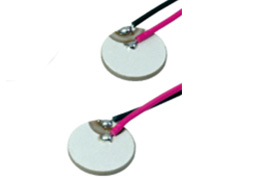 The transducer generates an ultrasonic pulse, which is reflected by the liquid surface and detected by the same sensor. The distance between the sensor and the liquid surface is determined using the duration between the acoustic wave’s emission and reception. Because of the use of non-contact measurement, the ultrasonic level meter may be widely used to measure the height of both liquid and solid materials, regardless of the kind of media.
Main Parameters
| Part Number | UA3S30 |
| Size | φ40~φ4100mm |
| Beamwidth | 12 ± 1° |
| Capacitance 2000 ~8000F |
Main Materials
| Electrical Data | Symbol | Main Materials | ||||||||||||||
| P-659 | P-660 | P-663 | P-664 | P-666 | P-667 | P-668 | P-669 | P-672 | P-673 | P-676 | P-678 | P-679 | P-690 | |||
| Piezo-electric coupling coefficient | kp | 0.58 | 0.70 | 0.67 | 0.67 | 0.78 | 0.10 | 0.68 | 0.62 | 0.70 | 0.68 | 0.7 | 0.72 | 0.65 | 0.74 | |
| k31 | 0.32 | 0.39 | 0.38 | 0.37 | 0.42 | 0.39 | 0.35 | 0.41 | 0.39 | 0.45 | 0.42 | 0.38 | 0.40 | |||
| k33 | 0.60 | 0.73 | 0.70 | 0.70 | 0.78 | 0.70 | 0.68 | 0.72 | 0.70 | 0.80 | 0.72 | 0.70 | 0.75 | |||
| kt | 0.42 | 0.46 | 0.45 | 0.45 | 0.50 | 0.45 | 0.46 | 0.44 | 0.46 | 0.46 | 0.50 | 0.47 | 0.46 | 0.48 | ||
| Relative dielectric constant | εT33 / ε0 | 1100 | 3200 | 2200 | 2800 | 4500 | 180 | 2300 | 1400 | 3400 | 2200 | 6000 | 2750 | 1600 | 3800 | |
| Piezo-electric charge constant |
d33×10-12C/N |
280 | 700 | 400 | 480 | 780 | 70 | 430 | 250 | 600 | 430 | 850 | 540 | 320 | 710 | |
|
d31×10-12C/N |
-120 | -350 | -200 | -350 | -230 | -130 | -280 | -230 | -420 | -260 | -150 | -360 | ||||
| Mechanical quality factor | Qm | 100 | 60 | 80 | 500 | 60 | 2500 | 90 | 1000 | 80 | 90 | 60 | 80 | 1000 | 70 | |
| Frequency constant |
fr·d kHz·cm |
230 | 190 | 200 | 220 | 180 | 200 | 230 | 190 | 200 | 180 | 190 | 230 | 190 | ||
|
fr·t kHz·cm |
210 | 200 | 200 | 225 | 200 | 225 | 200 | 200 | ||||||||
| Temp charac-teristics |
| TKfr | (-20℃~80℃) |
100 | 260 | 300 | 120 | 400 | 30 | 150 | 100 | 300 | 100 | 400 | 200 | 100 | 260 | |
|
| TKCT | (-20℃~80℃) |
1500 | 4500 | 5000 | 2500 | 6000 | 1800 | 1500 | 4000 | 2000 | 6000 | 3000 | 1500 | 4000 | |||
| Curie Temp. |
Tc
|
320 | 220 | 220 | 230 | 180 | 450 | 355 | 340 | 230 | 325 | 140 | 280 | 330 | 210 | |
| Dielectric loss |
tgδ(%)
|
1.20 | 1.80 | 2.00 | 0.50 | 2.60 | 0.70 | 2.00 | 0.30 | 2.30 | 2.00 | 2.60 | 1.50 | 0.40 | 1.80 | |
| Dielectric loss | tgδ(400V/mm,%) | 1.00 | 1.00 | |||||||||||||